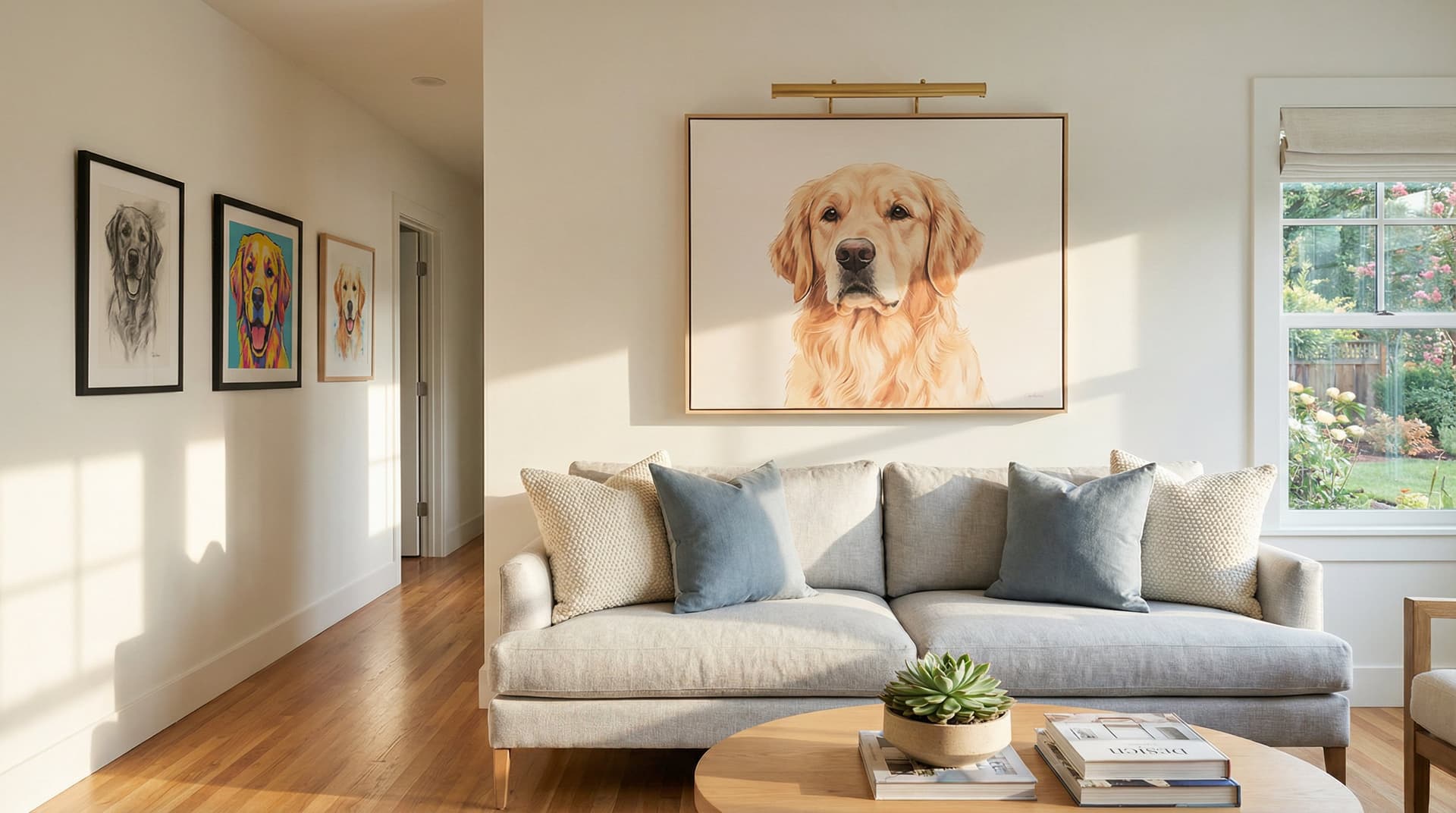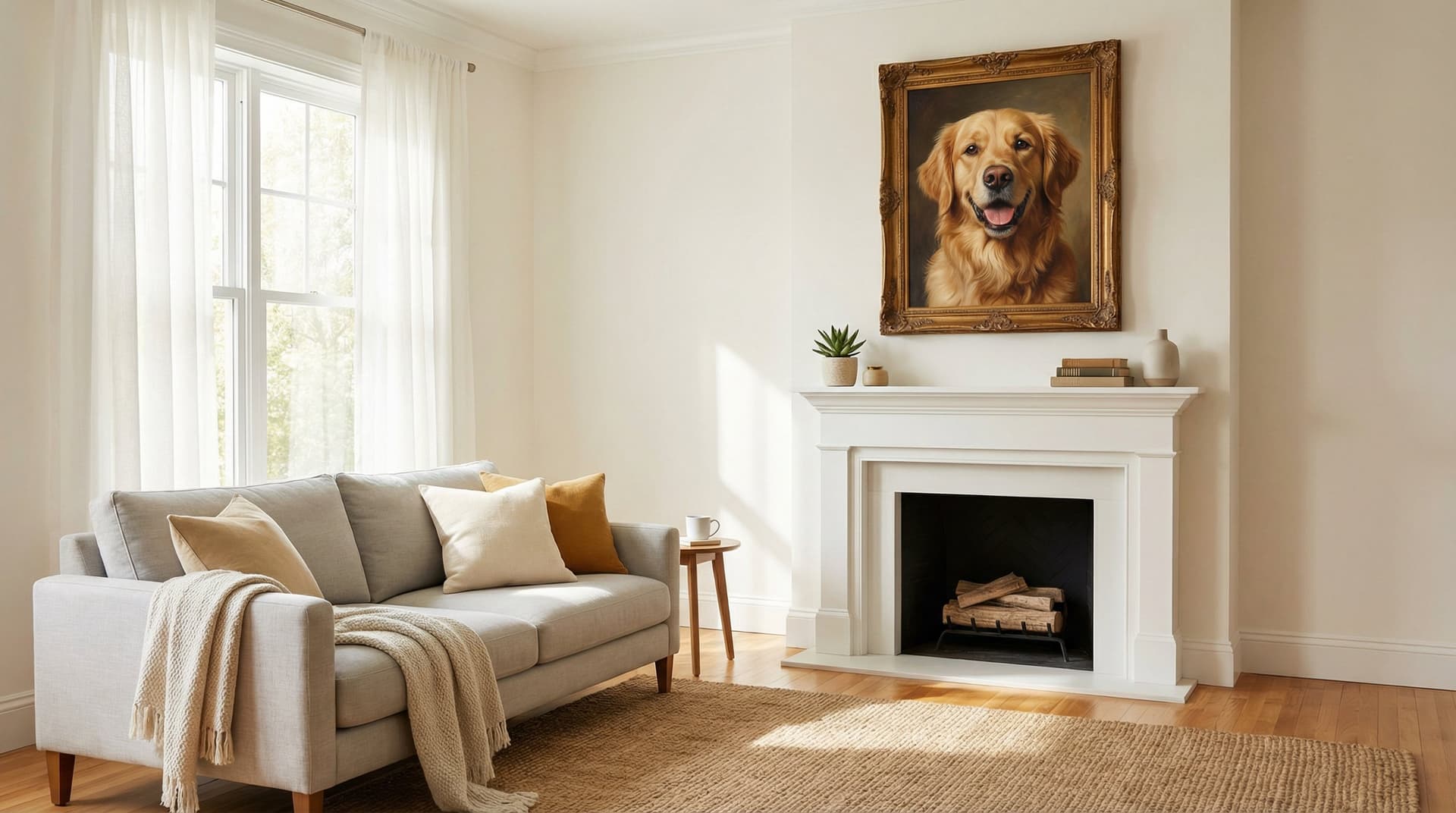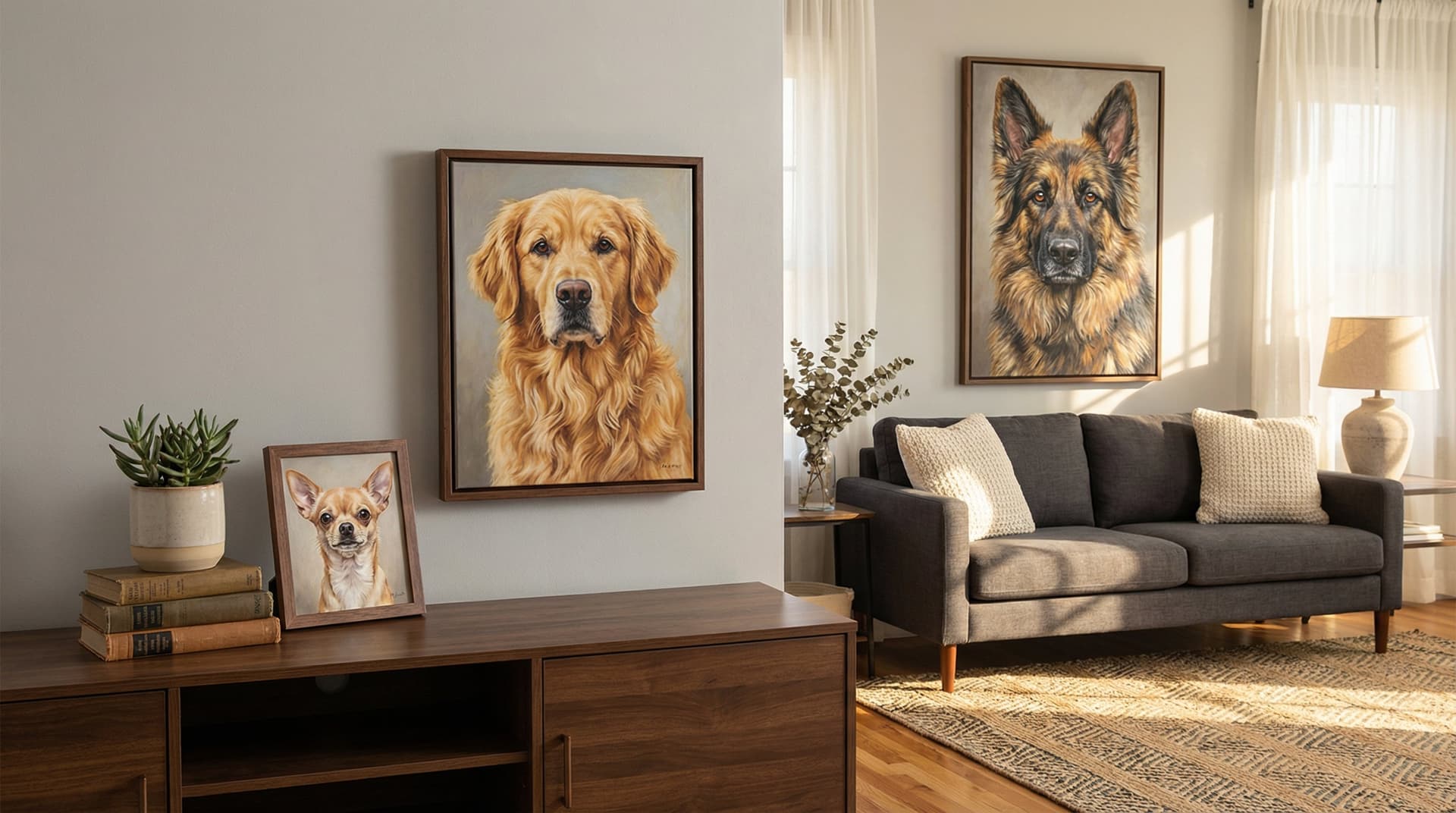

A gallery wall with pet art turns blank space into a love letter to your dog. Instead of generic store-bought prints, you get a display that tells your pup's story, from goofy puppy days to dignified senior moments.
We've helped dog parents create over 100,000 portraits, and we know firsthand how powerful a well-planned pet art wall can be. In this guide, we'll walk you through choosing layouts, matching styles to your home, and hanging everything so it actually looks intentional. Let's make those walls worthy of your best friend.
Plan Your Layout: Choosing Sizes, Styles, and Spacing That Actually Work
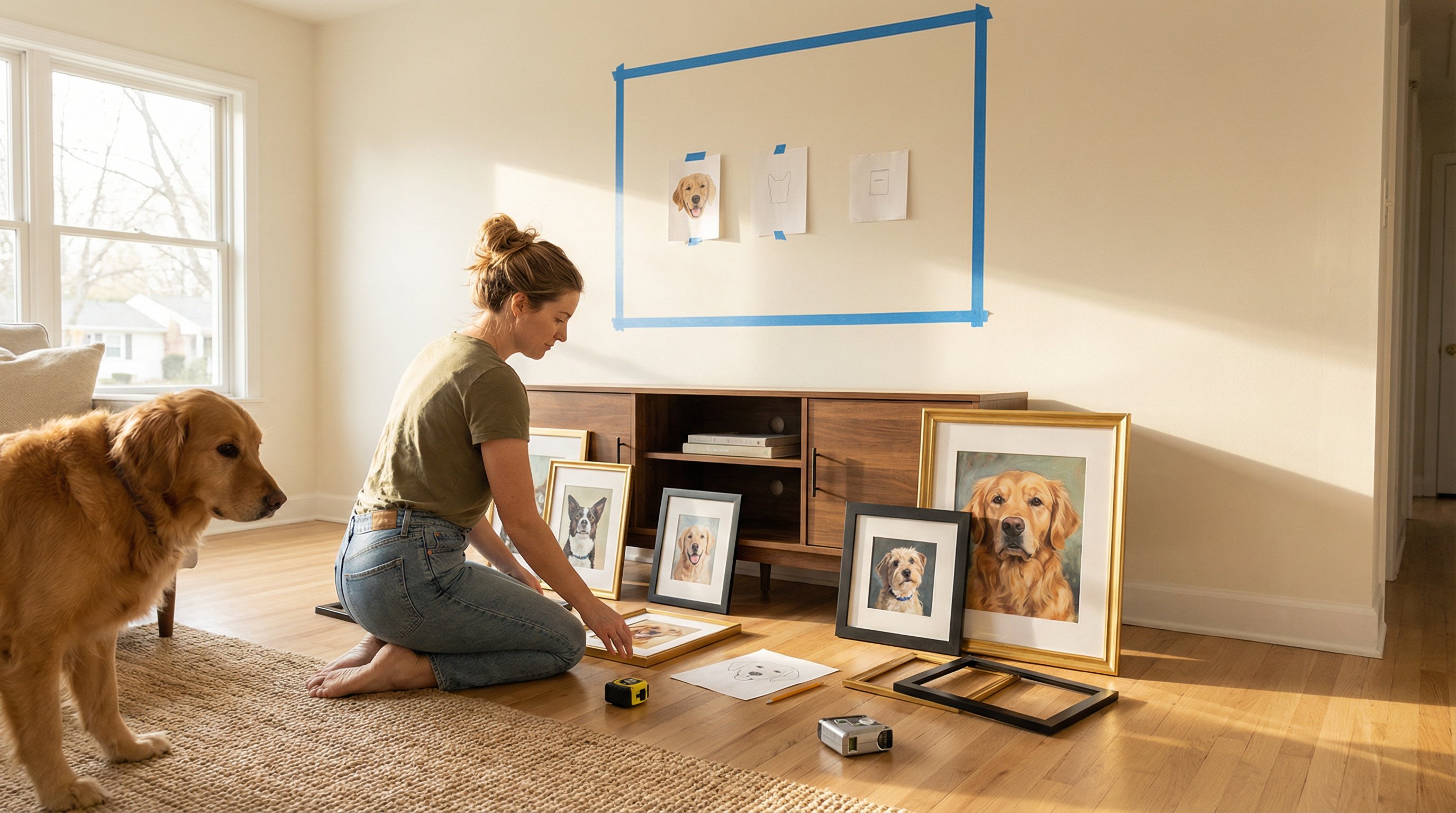
Before you pick up a hammer, grab a tape measure. The single biggest mistake we see dog parents make? Skipping the planning step and ending up with a lopsided arrangement that bugs them every time they walk by.
Define Your Art Zone
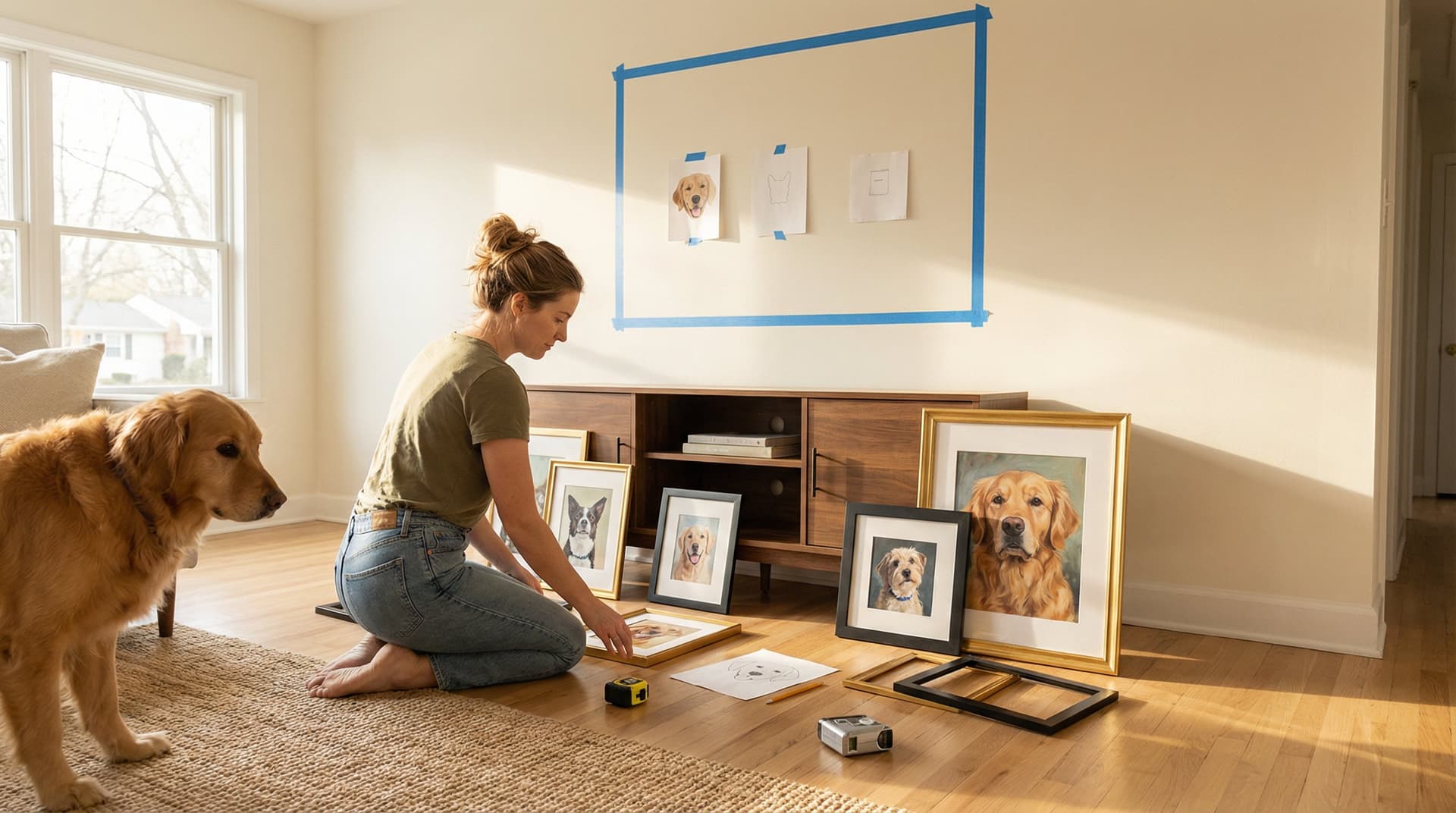
Measure the wall space you want to fill. Mark the boundaries with painter's tape so you can visualize the area. A good rule: your gallery wall with pet art should fill about two-thirds of the available wall width above a piece of furniture, or take up a defined section of an open wall.
Once you know your dimensions, decide on a layout style:
- Grid layout – Uniform sizes in neat rows. Clean, modern, satisfying.
- Organic cluster – Mixed sizes and shapes grouped together. Eclectic and personal.
- Linear arrangement – A single horizontal or vertical line. Perfect for hallways.
- Salon-style – Floor-to-ceiling coverage with varied pieces. Bold and dramatic.
Test Before You Commit
Lay your pieces on the floor first. Or cut paper templates to size and tape them to the wall. This takes ten minutes and saves you from unnecessary nail holes.
Keep 2–3 inches of spacing between frames for visual breathing room. Use an odd number of pieces, three, five, or seven tends to feel more natural than even groupings. And start with your focal piece slightly off-center, then build outward.
A laser level costs under $15 and pays for itself in sanity. Trust us on this one.
Pick Your Sizes Strategically
We recommend anchoring your gallery wall with pet art around one large statement piece (16×20 or bigger) and surrounding it with smaller prints. This creates a visual hierarchy that draws the eye.
If you're working with custom dog art generated from your own photos, you can order multiple sizes from the same image. That way, your pup's portrait becomes the centerpiece while smaller companion pieces fill in the arrangement.
Dogs are one of the most beloved animals worldwide, and their portraits deserve real estate on your wall that reflects that bond.
Make It Cohesive: Match Your Dog Art to Your Home's Vibe
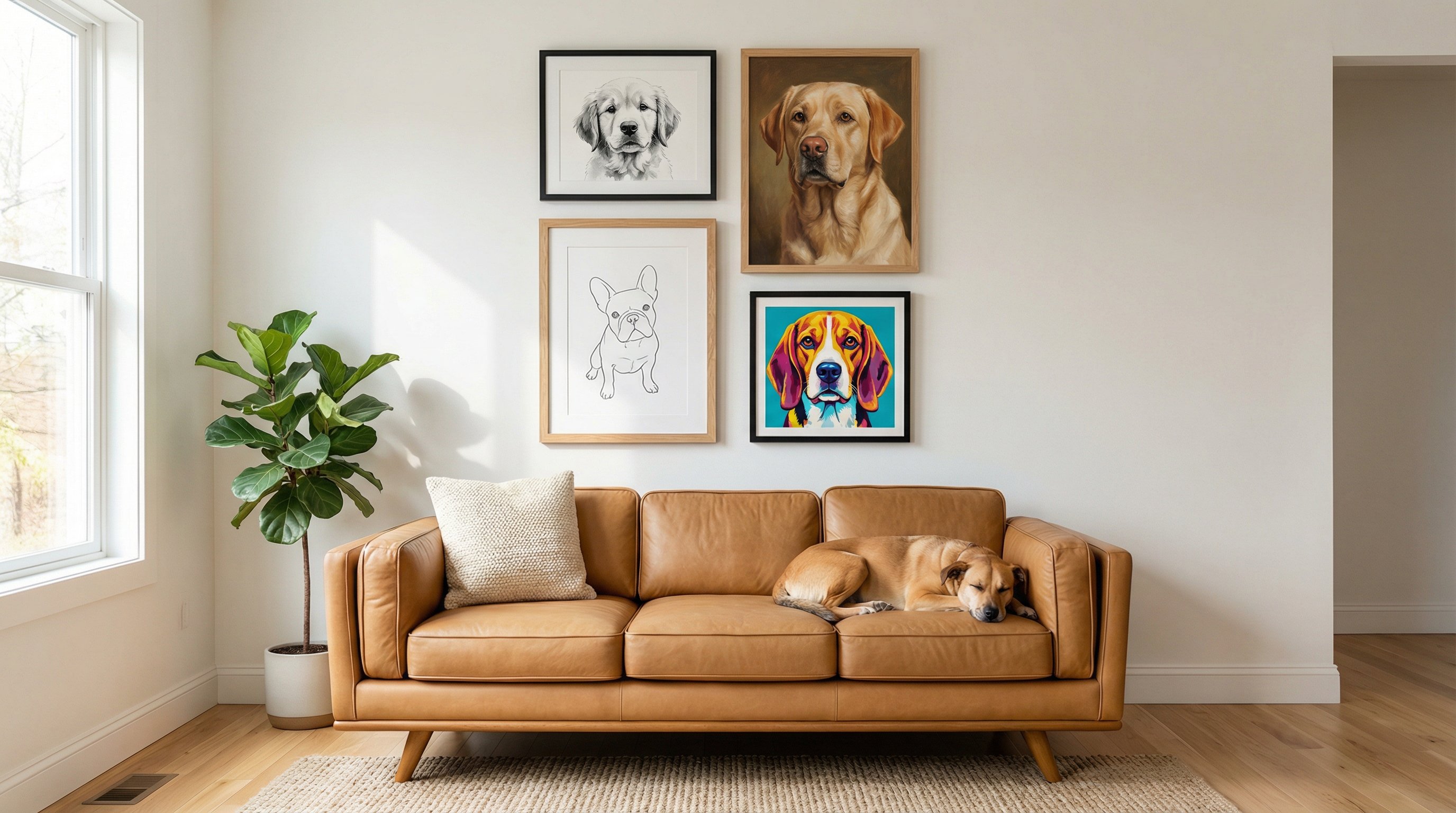
A gallery wall with pet art shouldn't look like you grabbed random prints at a flea market. Cohesion is what separates "curated" from "cluttered."
Choose a Theme
Themes give your wall a story. Some ideas we love:
- Life stages – Puppy, adolescent, adult, senior. A timeline of your dog's journey.
- One style, multiple pets – Same artistic treatment across different dogs (or dogs and cats).
- Color story – All black-and-white portraits, or all warm-toned paintings.
- Mixed media – Combine photographs, illustrations, and painted portraits for texture.
If you have both dogs and cats, dog and cat clip art in a consistent style can tie a multi-pet household wall together beautifully.
Match Your Color Palette
Pull two or three colors from your room's existing decor, think throw pillows, rugs, or accent furniture. Then select art that echoes those tones.
For minimalist spaces, black-and-white or muted watercolor dog art works beautifully. For a room with more personality, pop art dog portraits in bold, saturated colors can act as the room's focal point.
Frame Consistently
Frames are the glue that holds a gallery wall together. You don't need identical frames, but they should share one unifying element, the same color, the same material, or the same profile width.
Here's a quick framework:
| Room Style | Frame Choice | Art Style |
|---|---|---|
| Modern/Minimal | Thin black or white | Line art, watercolor |
| Traditional | Ornate wood | Oil painting, classic portrait |
| Eclectic/Boho | Mixed metals, natural wood | Mixed media, bold color |
| Farmhouse | Distressed wood, floating | Sketch, muted tones |
A rich oil painting dog art print in an ornate gold frame looks incredible in a traditional living room. The same portrait in a slim black frame shifts the energy entirely.
The ASPCA recommends creating environments that reflect the bond you share with your pet, and we think a thoughtfully designed art wall does exactly that.
Capture the Right Photos
The art is only as good as the source photo. Shoot in natural light, get down to your dog's eye level, and capture their personality. That alert head tilt. The lazy afternoon sprawl. The zoomies mid-sprint.
We generate portraits in 70+ styles from a single photo, delivered in under 60 seconds at 4K resolution. No artistic skills needed, just a decent snapshot of your pup.
Hang It Up and Style the Finishing Touches
You've planned your layout. You've chosen your art and frames. Now it's time to get everything on the wall.
Placement Matters
Hang your gallery wall with pet art at eye level, the center of the arrangement should sit roughly 57–60 inches from the floor. This is the standard gallery height museums use, and it works in homes too.
Best spots for a pet art gallery wall:
- Entryway – Greet guests with your dog's face. Instant conversation starter.
- Above the sofa – Classic placement with built-in furniture anchoring.
- Staircase wall – Follow the angle of the stairs for a dynamic display.
- Home office – Because staring at your dog's portrait beats staring at a blank wall during meetings.
Use the Right Hardware
Command strips are your best friend for initial placement. They're removable, they don't damage walls, and they let you adjust positioning without guilt. Once you're sure everything is where you want it, you can switch to picture hooks or French cleats for heavier frames.
Pro tip: hang your focal piece first. Step back. Then add surrounding pieces one at a time, checking alignment as you go.
Add Dimension
A gallery wall with pet art doesn't have to be just framed prints. Mix in:
- A small floating shelf with a pet figurine or plant
- A decorative mirror to reflect light and add depth
- A quote print or typography piece ("All you need is love and a dog")
- A leash hook or small sculptural element
These extras break up the visual pattern and make the wall feel lived-in rather than staged.
Browse our dog art prints gallery for style inspiration, seeing different portraits together can spark ideas for your own arrangement.
Leave Room to Grow
Don't fill every inch. Leave a few intentional gaps so you can add new pieces over time. Maybe you'll adopt another dog (shelters always have amazing pups waiting), or maybe you'll want to refresh a portrait in a new style.
We built our portrait ordering process to be fast and affordable, so adding to your gallery wall is never a big commitment. Upload a photo, pick a style, preview it free, and print.
That's the beauty of a gallery wall with pet art, it evolves with your life and your pack.
Frequently Asked Questions About Gallery Walls with Pet Art
What is the best way to plan a gallery wall with pet art?
Start by measuring your wall space and marking boundaries with painter's tape. Lay pieces on the floor or use paper templates to test layouts before hanging. Keep 2–3 inches of spacing between frames, use odd numbers of pieces, and anchor with one focal piece slightly off-center.
How far apart should frames be on a pet art gallery wall?
Maintain 2–3 inches of spacing between frames for visual breathing room. This spacing prevents the wall from feeling cluttered and allows each portrait to stand out while maintaining cohesion across your gallery wall with pet art.
What layout styles work best for a dog art gallery wall?
Popular options include grid layouts (uniform, modern), organic clusters (mixed sizes, eclectic), linear arrangements (hallways), and salon-style (floor-to-ceiling). Choose based on your room's vibe and available wall space to create a display that feels intentional.
How should I match pet art to my home's interior design?
Select frames that share a unifying element like color or material, and choose art that echoes your room's color palette. For modern spaces, black-and-white or watercolor dog art works well; eclectic rooms suit bold pop art dog portraits that act as focal points.
At what height should I hang a gallery wall with pet art?
Hang your gallery wall at eye level with the center approximately 57–60 inches from the floor. This follows standard museum gallery height and ensures viewers engage comfortably with your dog art portraits without straining.
What's the ideal focal piece for a pet art gallery wall?
Anchor your arrangement with one large statement piece (16×20 or larger) and surround it with smaller prints. This creates visual hierarchy and draws the eye, especially when using a custom portrait of your dog from multiple sizes of the same image.