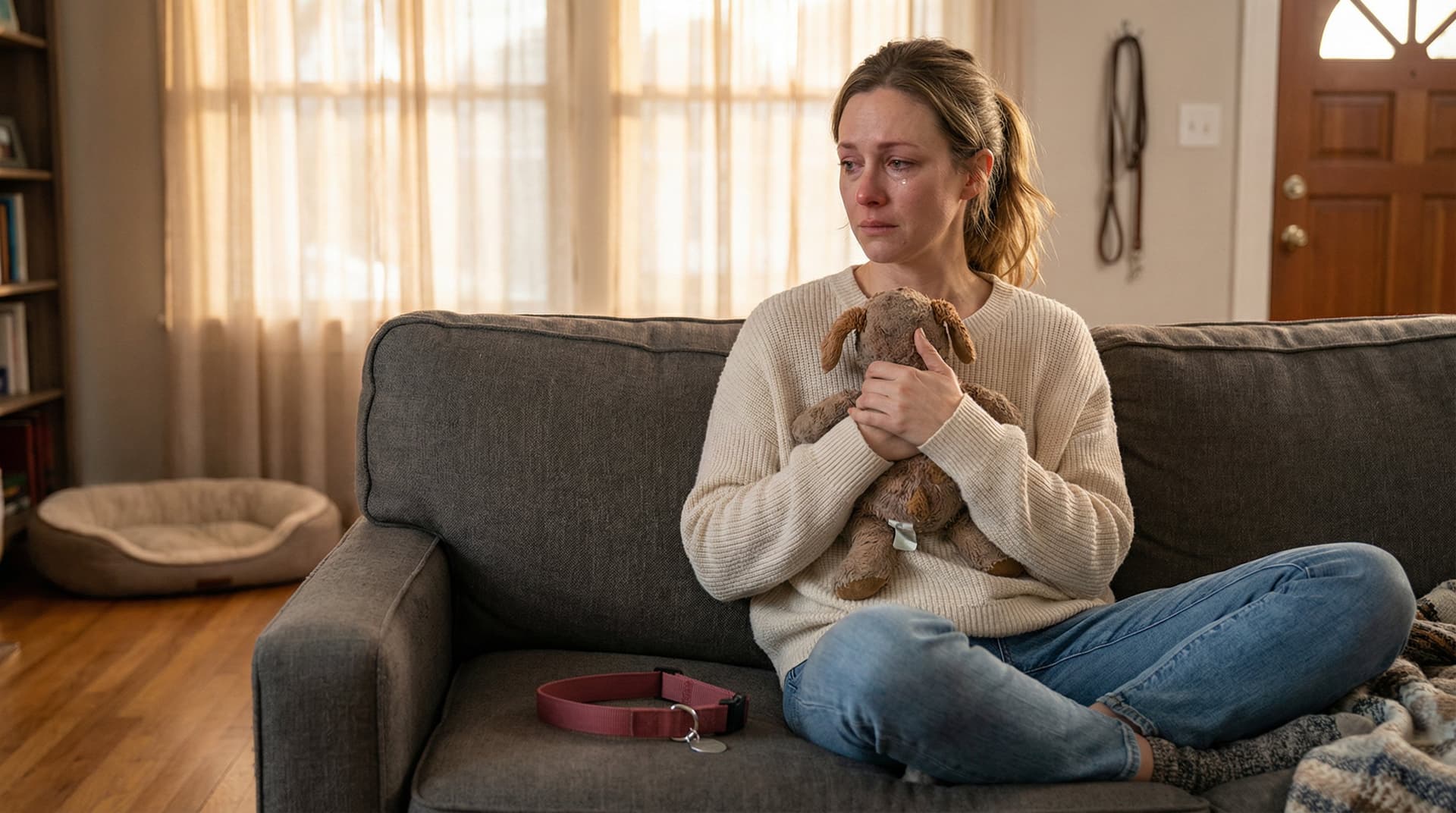

Learning how to cope with losing a dog is one of the hardest things we'll ever face as dog parents. That empty bed, the quiet house, the leash still hanging by the door, it all hits differently when the one who made our world brighter is gone.
We wrote this guide because we've been there. And we know that grief after losing a dog isn't something you simply "get over." It's something you move through, gently and at your own pace. Whether your loss is fresh or you're still carrying it months later, we hope these words bring a little comfort and a lot of permission to feel exactly what you're feeling.
Why Losing a Dog Hurts So Deeply — And Why Your Grief Is Valid
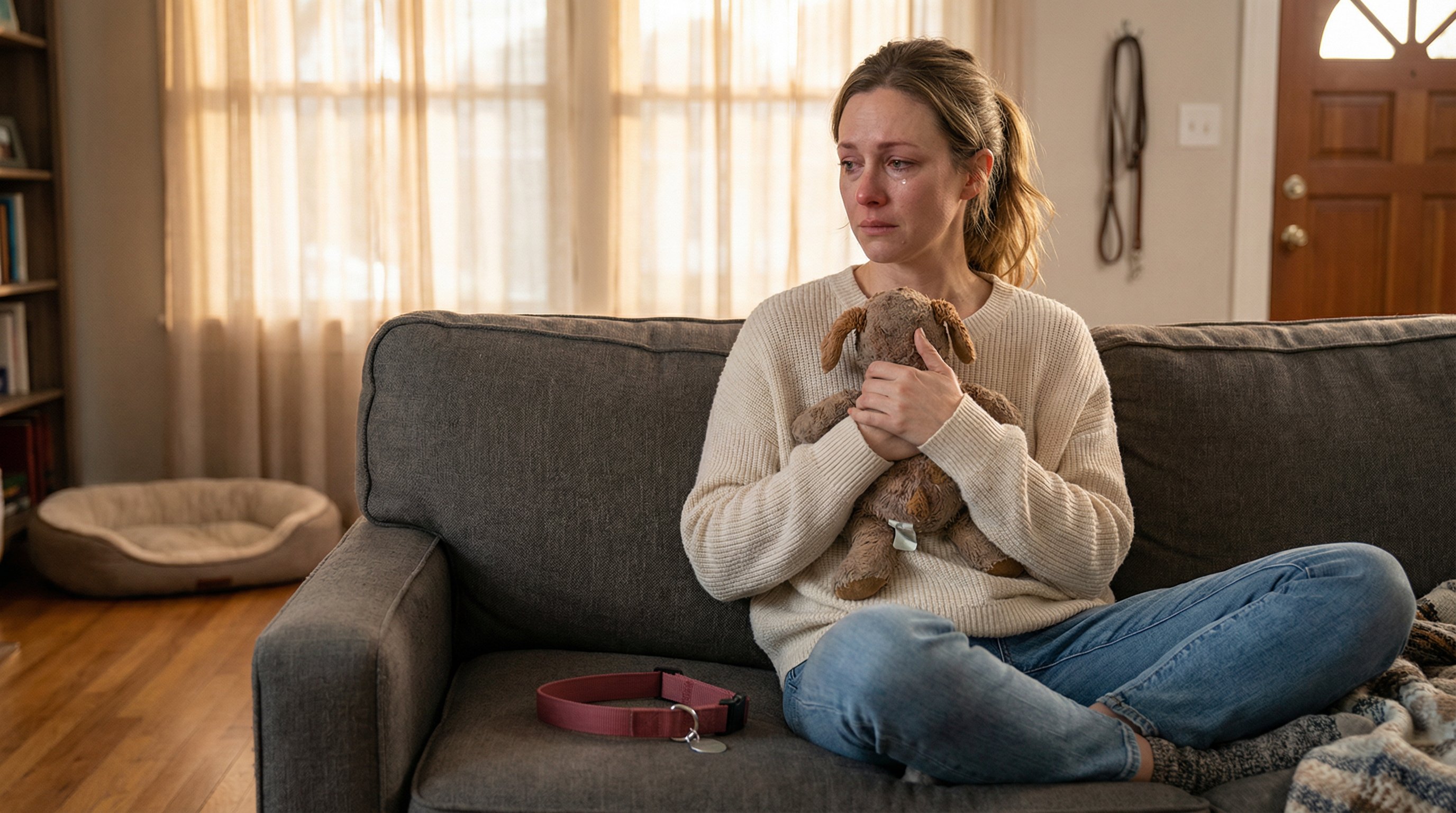
Here's the truth most people won't say out loud: losing a dog can hurt just as much as losing a human loved one. Research backs this up. Dogs share our daily rhythms, they greet us at the door, sleep beside us, and fill our homes with warmth and sound. According to National Geographic's research on domestic dogs, the bond between humans and dogs stretches back thousands of years, wired deep into how we connect emotionally.
When that presence disappears, the silence is devastating. It's not just "missing a pet." It's losing a companion who shaped your mornings, your walks, your entire routine. The absence can feel, as many grieving dog parents describe it, excruciatingly loud.
Your Feelings Are Normal
If you're feeling intense sadness, anger, guilt, or anxiety, that's a completely normal reaction to pet loss. Grief doesn't follow a straight line, either. You might feel okay one afternoon and then fall apart because you found a stray toy under the couch.
These unpredictable waves of emotion are part of grieving a dog. They don't mean you're broken or overreacting. They mean you loved deeply. And that love deserves to be honored, not dismissed.
Why Society Gets It Wrong
Unfortunately, not everyone understands. Friends or coworkers might say things like "it was just a dog" or "you can always get another one." These comments sting because they minimize a real, profound loss.
But your grief is valid. Full stop. You don't need anyone's permission to mourn your best friend. The bond you shared with your dog was unique and irreplaceable, and the pain you're feeling reflects exactly that.
Healthy Ways to Process and Move Through Your Grief

Knowing how to cope with losing a dog doesn't mean having all the answers right away. It means giving yourself space to grieve honestly, and building small habits that help you move forward without rushing.
Acknowledge and Express Your Emotions
Let yourself cry. Suppressing pain doesn't make it go away, it actually prolongs the grieving process. If tears come during a random Tuesday meeting, that's okay. Grief doesn't wait for convenient moments.
When memories surface, try to focus on the life you shared rather than replaying final moments. Think about:
- The way your dog tilted their head when confused
- Your favorite walking route together
- The ridiculous sleeping positions they'd curl into
Those memories are yours forever.
Build a Support System
Talking to someone who gets it makes a real difference. Not everyone will understand your grief, but fellow dog lovers almost always do.
- Join a pet loss support group (many exist online and meet weekly)
- Call a pet loss hotline when you need to talk it out
- Lean on friends and family who respect your feelings
Grieving a dog is an ongoing process, not a one-time event. Accept support from others and don't feel pressured to "move on" by anyone else's timeline.
Practice Daily Self-Care
Your body and mind need extra care right now. Small comforts matter more than you think.
Give yourself permission for comfort food, naps, and quiet evenings. Stick to a routine as much as possible, it creates a sense of stability when everything feels off-balance. Take things one day at a time. Some days, one hour at a time.
The ASPCA's care resources remind us that caring for ourselves is part of honoring the animals we've loved.
Move Toward the Pain, Not Away From It
This sounds counterintuitive, but working through your feelings, rather than avoiding them, supports healthier grief. Distraction helps temporarily. But sitting with sadness, journaling about your dog, or simply saying their name out loud when you miss them? That's where real healing begins.
There's no "right" timeline. Some people feel lighter after weeks. Others carry a tender ache for months or years. Both are normal. Both are okay.
Honoring Your Dog's Memory and Finding Light Again
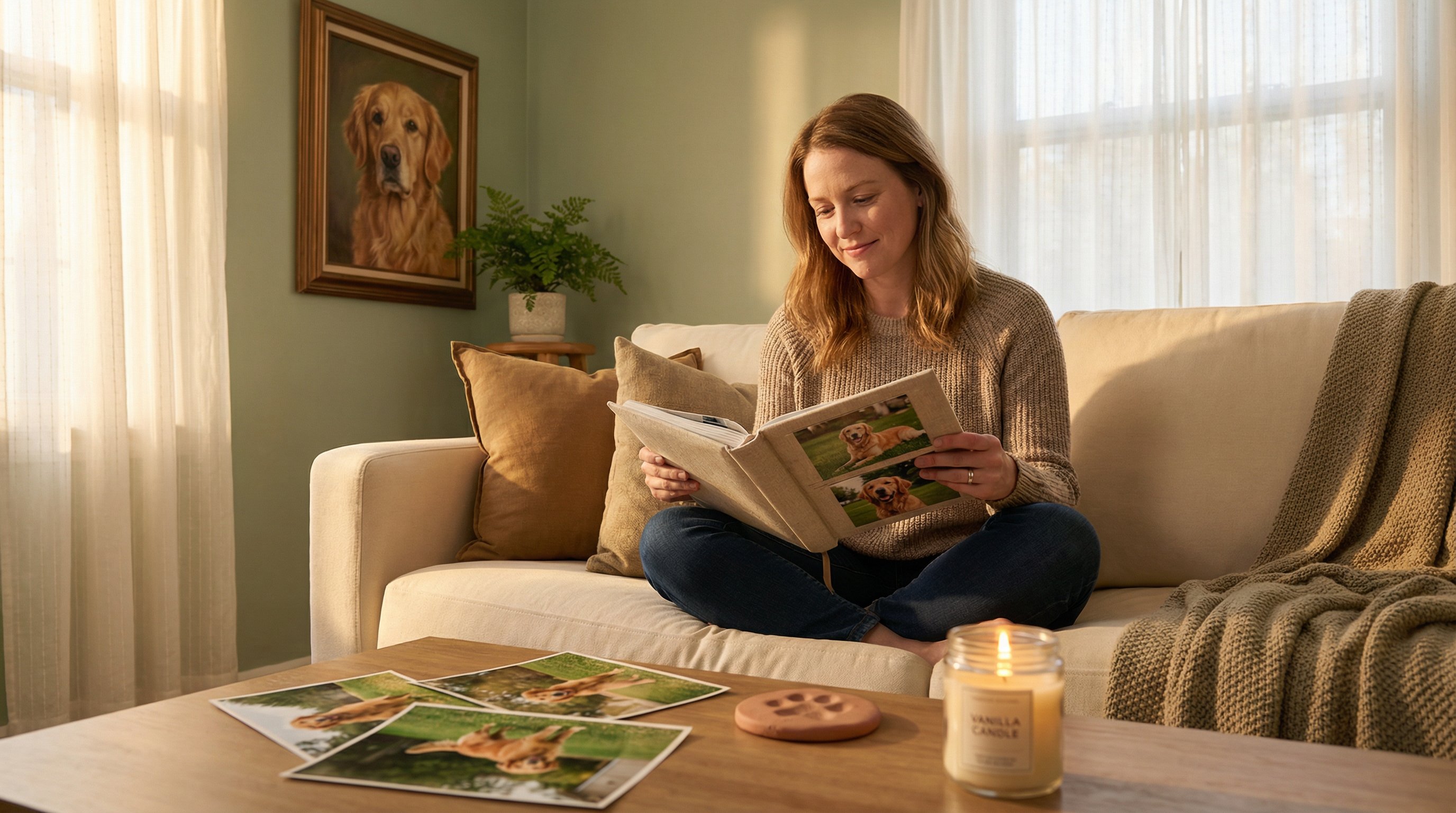
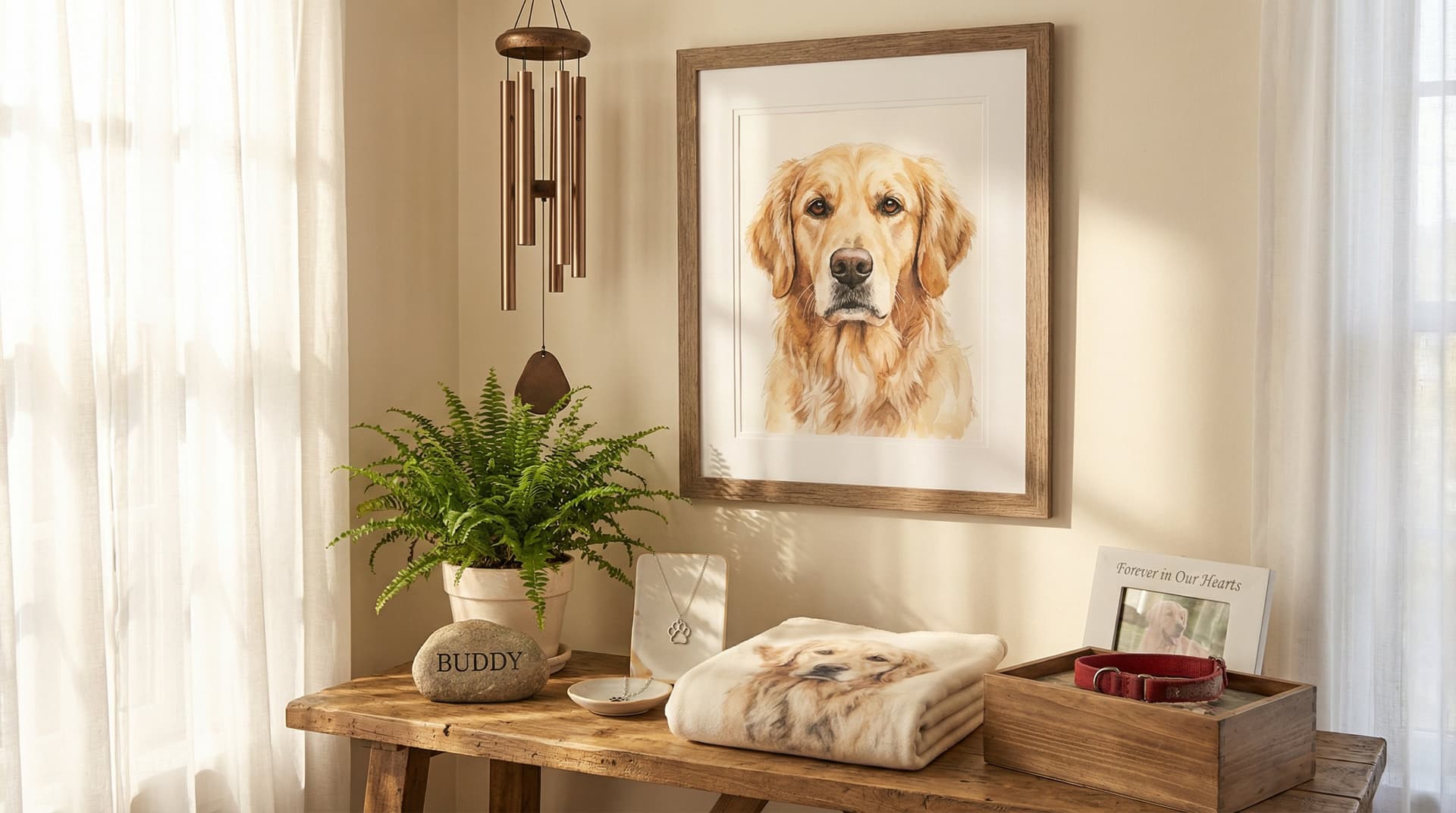
One of the most healing things we can do after losing a dog is create something beautiful in their memory. It transforms grief into purpose, and keeps our dog's spirit alive in a tangible way.
Create a Lasting Tribute
There are so many meaningful ways to celebrate the life you shared:
- Write a poem or letter to your dog, saying everything you wish you could
- Build a scrapbook filled with photos, paw prints, and favorite moments
- Commission a memorial stone or plaque for your garden
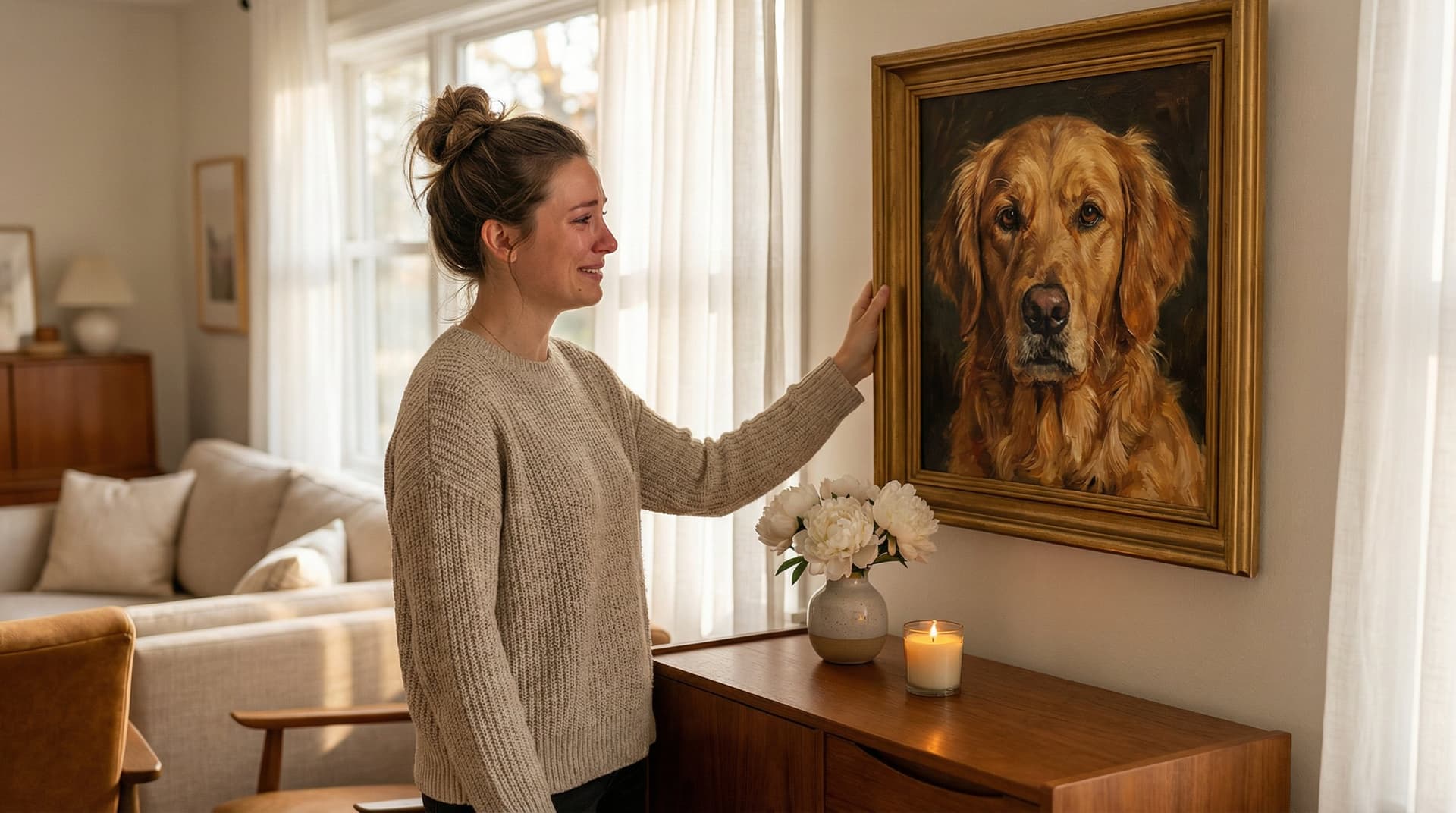
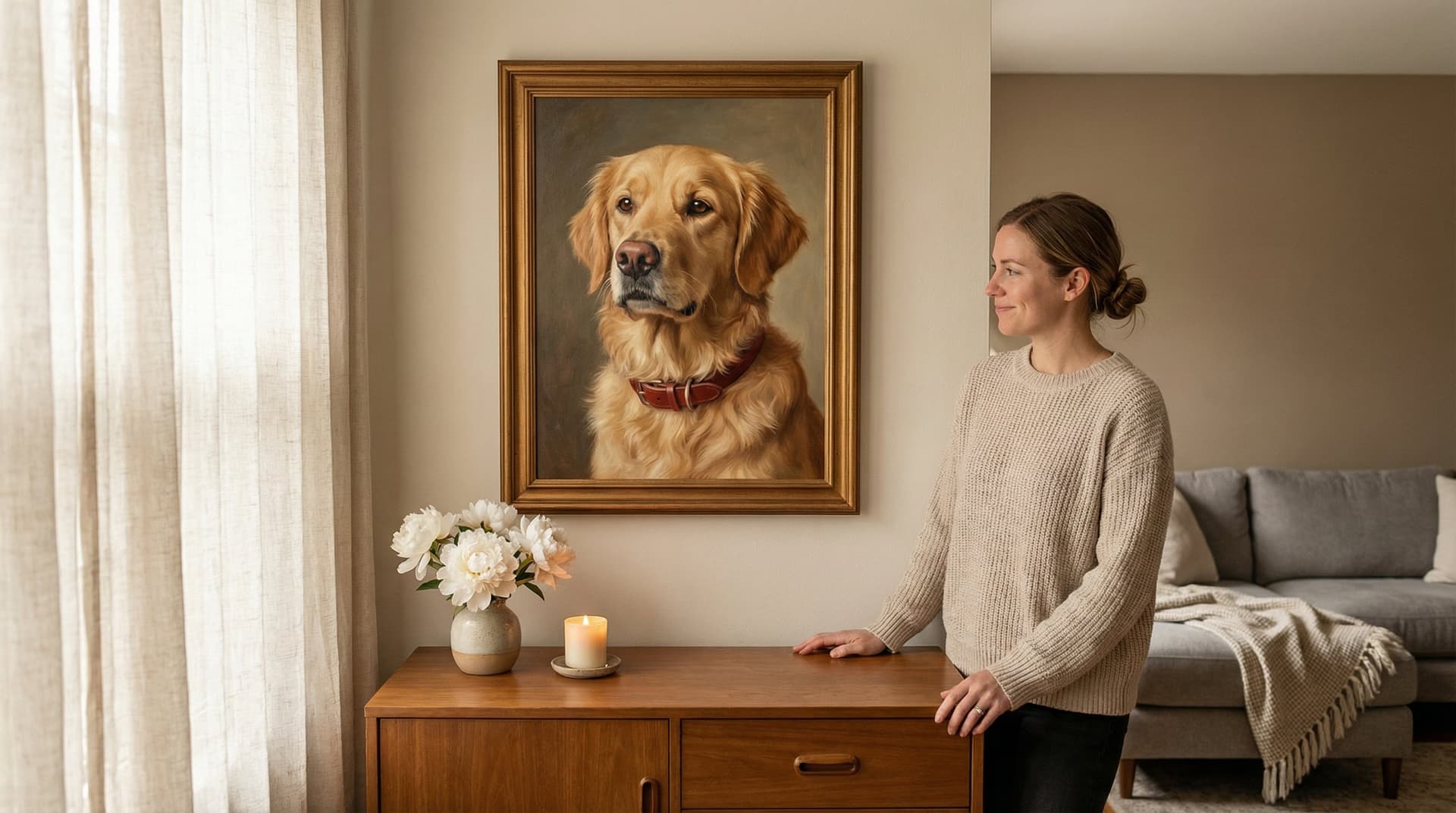
- Transform a beloved photo into custom dog memorial art that captures their personality forever
Many dog parents find that turning a favorite snapshot into a beautiful dog art print helps keep their companion close, hung on the wall where they can see that face every day. It's a small thing that carries enormous comfort.
Other meaningful gestures include candlelight ceremonies, planting a memorial garden, or making a donation to a shelter in your dog's name.
Finding Light Again
Healing doesn't mean forgetting. It means reaching a place where you remember your dog with more smiles than tears.
When you're ready, and only when you're ready, consider giving back to the dog community. Volunteer at a local shelter. Foster a dog who needs temporary love. Organizations like Animal Humane Society always need caring people who understand what dogs mean to us.
You might also find comfort in creating personalized dog wall art as a gift for a friend going through similar loss. Sometimes helping others grieve is part of our own healing.
Over time, the sharp edges of grief soften. Your dog's memory doesn't fade, it settles into a warm, permanent place inside your heart. And that love? It never goes away.
Conclusion
Figuring out how to cope with losing a dog isn't a one-size-fits-all journey. Some days will be harder than others. But your grief is proof of a love that mattered deeply, and that's something worth honoring.
Be gentle with yourself. Lean on people who understand. Create something meaningful in your dog's memory. And know this: the love you shared doesn't end with goodbye. It lives on, in you, in every memory, and in the light your dog left behind. 🐾
Frequently Asked Questions About Coping With Losing a Dog
Is it normal to feel intense grief after losing a dog?
Yes, absolutely. Losing a dog can hurt as deeply as losing a human loved one. Dogs share our daily routines and fill our homes with warmth, so their absence feels devastating. Intense sadness, anger, and anxiety are completely normal reactions to pet loss, and your grief is valid.
How long does it take to cope with losing a dog?
There's no set timeline for grieving a dog. Some people feel lighter after weeks; others carry a tender ache for months or years. Both are normal. The key is moving through grief at your own pace without rushing, allowing unpredictable waves of emotion to surface without judgment.
What are healthy ways to process grief after losing a dog?
Allow yourself to cry and feel your emotions rather than suppressing them. Build a support system by joining pet loss support groups or calling a pet loss hotline. Practice daily self-care with comfort food and rest. Moving toward your pain through journaling or saying your dog's name helps facilitate deeper healing.
How can I honor my dog's memory after they pass?
Create meaningful tributes like writing a letter, building a scrapbook, commissioning a memorial stone, or transforming a favorite photo into dog art prints. Many find comfort in candlelight ceremonies, memorial gardens, or donations to shelters in your dog's name.
What should I do if people don't understand my grief over losing a dog?
Your grief is valid regardless of others' understanding. Connect with fellow dog lovers who respect your feelings through pet loss support groups. The bond you shared with your dog was unique and irreplaceable, so your pain reflects that profound connection—it deserves to be honored, not dismissed.
Can grieving a dog help me heal by helping others?
Yes. When ready, volunteering at shelters, fostering dogs, or helping others through pet loss can transform grief into purpose. Many animal organizations always need caring people who understand what dogs mean to us, making this a meaningful part of your healing journey.